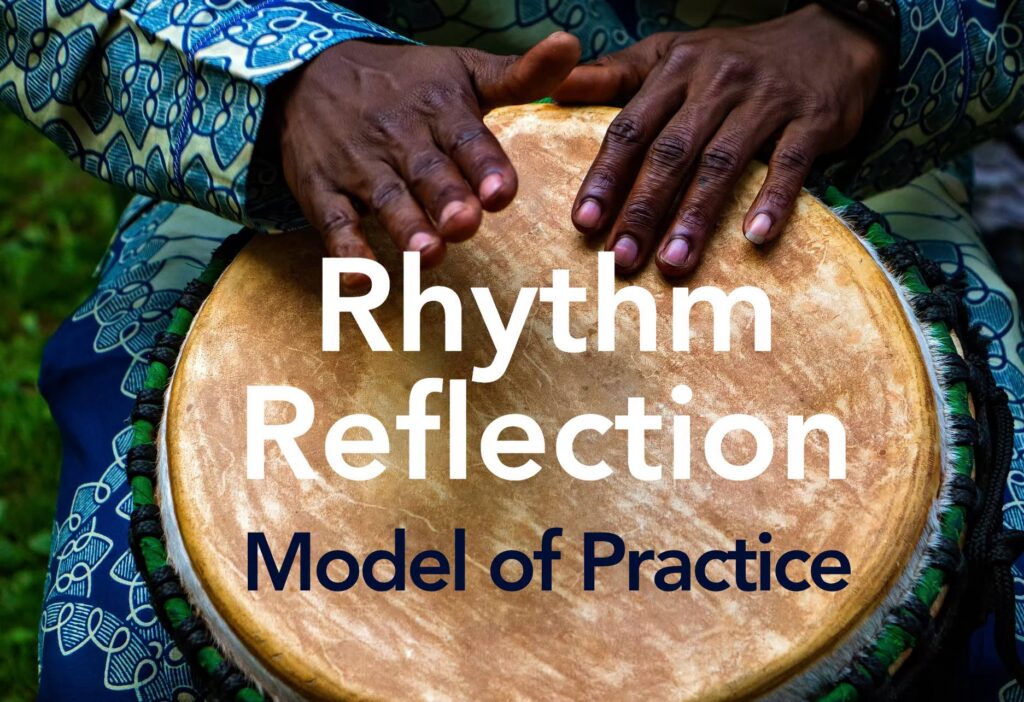
We are proud to share that our founder, Simon Faulkner, has written a guest article for The Occupational Therapy Hub, introducing the Rhythm & Reflection Model of Practice to occupational therapists around the world.
Response to rhythm is a naturally occurring human trait. It is present across cultures and develops in the womb, long before we learn to speak. As Simon explains, occupational therapists have a long history of using arts-based practices in mental health rehabilitation, from ancient healing rituals through to modern day art and music therapy, with rhythmic interventions, seen in the dance, drumming and vocal traditions of Indigenous communities worldwide, often at the core.
A back seat, despite the evidence
Despite this deep evidence base, and research spanning over 30,000 empirical papers on the impact of art-based intervention on our psychological, social, biological and behavioural health, music and other arts-based activities have taken a back seat in recent years to medication and cognitively based therapies. For occupational therapists in particular, the growing influence of recovery-orientated, talk-based approaches has shifted the balance of the work, often away from the very activities that give occupational therapy its name.
The power of rhythm in the room
The therapeutic power of group music making, to lift mood and foster belonging and connection, makes it a genuinely useful tool for clinical engagement. Studies of drumming in mental health settings have shown significant increases in social resilience and wellbeing, with corresponding reductions in anxiety sustained three months after the program ended.
It is wonderful to see this evidence reaching occupational therapists and allied health professionals more broadly, and to have Simon’s insights featured on a platform read by OTs around the world.
Read the full article, ‘The Impact of Rhythm and Reflection as a Model of Practice’, on The Occupational Therapy Hub: https://www.theothub.com/article/rhythm-reflection-model-of-practice (OT+ resource).
If you would love to learn how to bring rhythm-based practice into your own work, Rhythm2Recovery runs facilitator training across Australia and internationally throughout the year. Browse our upcoming trainings at rhythm2recovery.com/r2r-training-courses/.